UT App
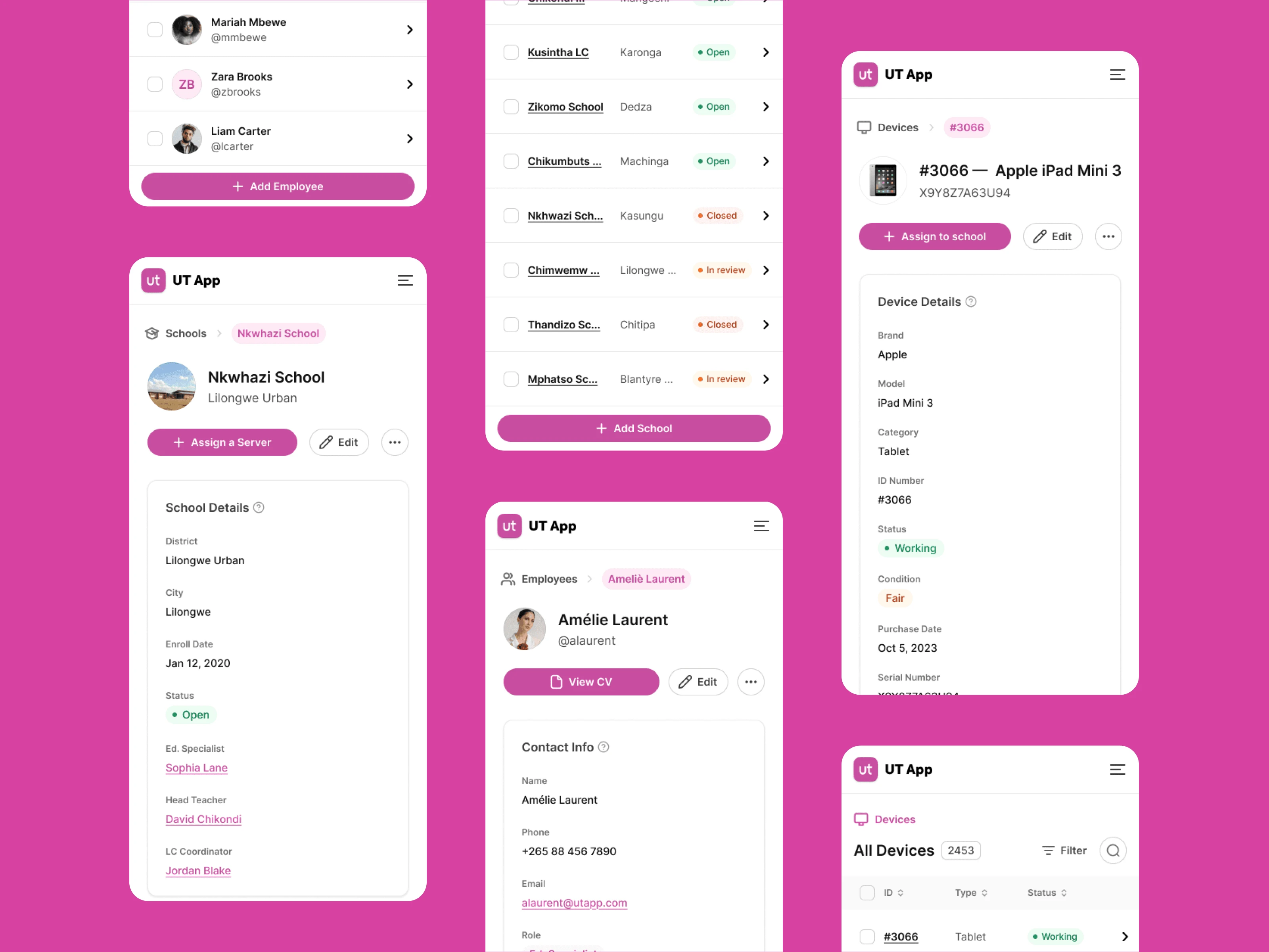
An MDM system made for an NGO in Africa, to manage the mobile devices its volunteers and staff use.
- Duration
- 8 months
- Type
- MDM app concept
- Deliverables
- Wireframe, Design System, UI Design
- My role
- UI/UX, Prototyping
Overview
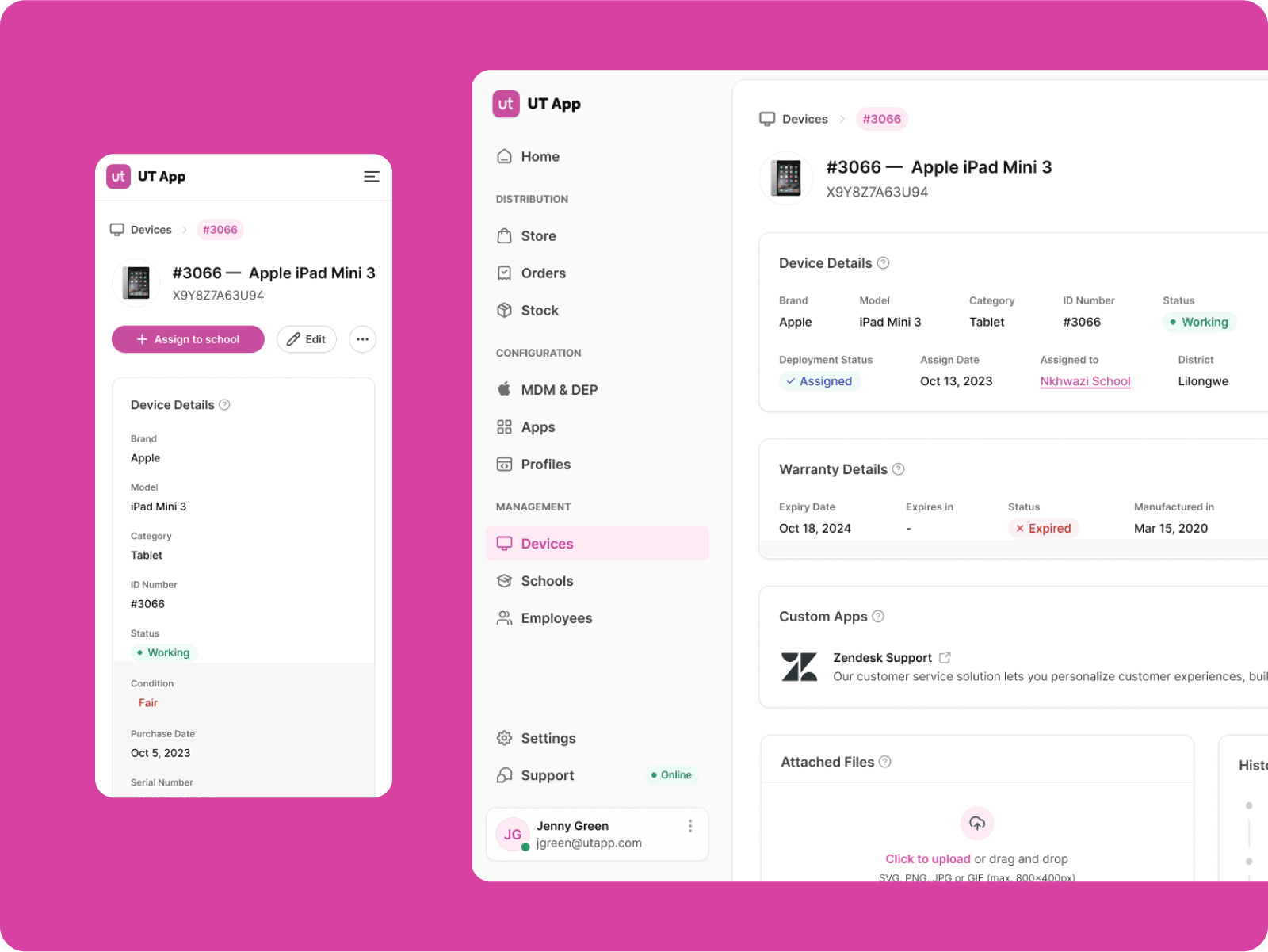
UT App is an MDM system made for an NGO in Africa, to manage the mobile devices its volunteers and staff use.
Background
Managing devices was hard: they went to the wrong people, got lost, and waited a long time for repairs. The app brings all of it into one place, so the team spends less time chasing devices.
What I’ll cover
I’ll go through the objectives, the design process, what I learned from users, how I’d test it, and what the app changes for the NGO.
For privacy reasons I can’t show the real deliverables. This case study uses summarized, anonymized information and leaves out anything confidential about the client.
Definition
First we decided how to measure success, with the KPIs below, then planned the product design timeline.
Time on Task
The average time required to complete critical tasks (e.g., allocating a device, updating user data, tracking a lost device).
Error Rate
Increase in the accuracy of device tracking, measured by the reduction in lost devices.
System Usability Scale
A score given by users based on the ease of use of the system, measured through a standardized survey.
Research goals & methods
Research phase
The research looked at what users need, and where assigning and tracking devices goes wrong today.
The questions I wanted to answer:
- What are the technical difficulties in device allocation, tracking and maintenance?
- What is the NGO structure?
- How can we simplify the communication between members of the organization?
- How does the learning class works?
User needs
User-friendly system
A system simple enough for people with little technical knowledge.
Offline and remote functionality
It has to keep working where the internet is weak or missing.
Pain points
“The process for assigning devices takes forever. It feels like I spend more time managing devices than doing my actual job.”
“We don’t have a good way to generate reports. I need to know how devices are being used or where there are issues.”
“When a device is lost or broken, it takes too long for the message to reach the right people. Whatsapp isn’t the right tool for this.”
Collected data
Data was collected through:
- Interviews with the NGO management and Educational Specialists to understand their needs and challenges.
- Field research in schools to gain insights into the device management processes.
- Team Canvas to collect feedback and ideas for improvement.
Empathy map
- Teachers need support to use tablets effectively.
- Every school faces unique challenges.
- How can I ensure teachers and children stay motivated?
- Are we making a sustainable impact?
- Conducts hands-on training sessions for teachers.
- Reports technical related challenges to IT.
- Hopeful: They are transforming education.
- Worried: Teachers are struggling to adapt to the new tools.
Problems statement
Problem 1
Difficulty in deploying and maintaining tablets due to limited IT infrastructure, expertise and personnel (2 people in IT, only one with expertise).
Problem 2
No tool for managing a large number of devices, so configurations and updates were slow (3 months). Everything was on a whiteboard.
Problem 3
Little offline support, so devices are hard to use where the connection is poor or missing.
Target definition
James Green
Educational Specialist
“Technology should make learning easier.”
Bio
James is a trainer with 10 years of experience mentoring teachers.
- Age:
- 38
- Education:
- Master in EL
Personality traits
- Help teachers feel confident using technology in class.
- Provide ongoing support and training with minimal disruption.
- Slow device setups and onboarding.
- Limited effectiveness in areas with no internet.
- Took 3 months to update all devices.
- All the schools and devices are on a whiteboard, it’s all physical.
- Only 2 people are in charge of IT management.
- Improve educational outcomes through effective tech use.
- Keep the technology program going over time.
Solution brainstorming
Proposed solution
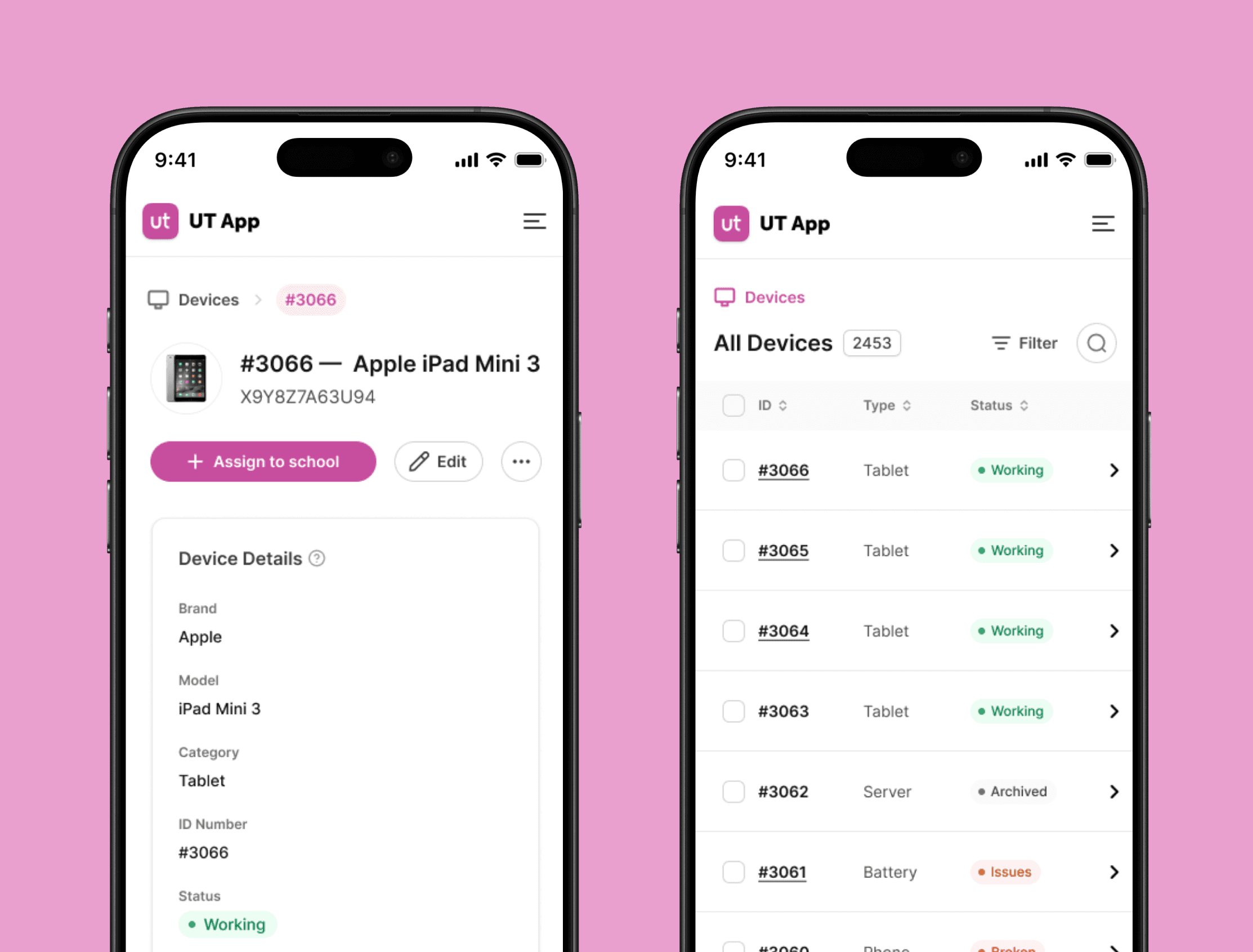
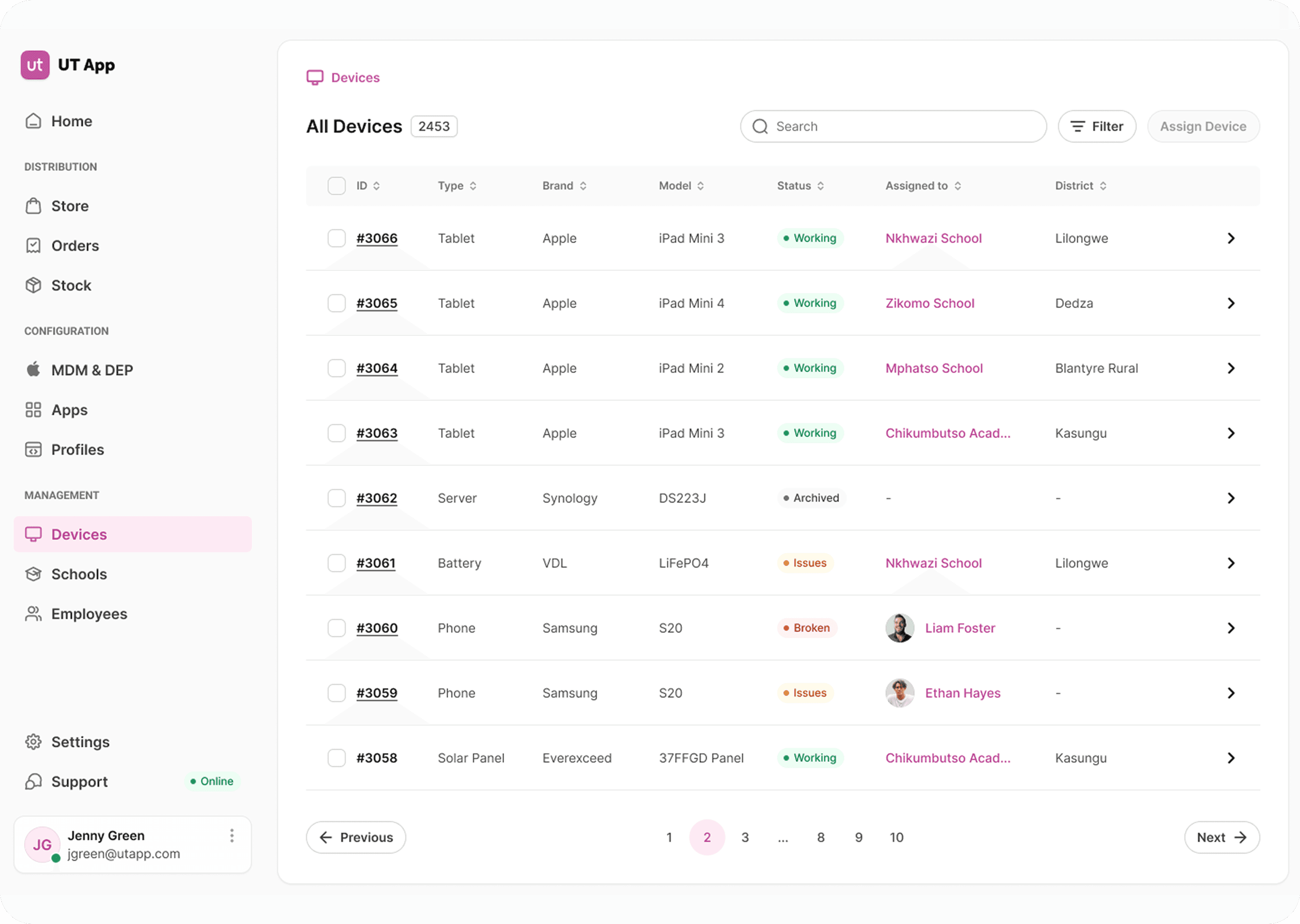
A Mobile Device Management (MDM) system built around the problems of schools in Africa: device management, offline support and safe tools for education, so teachers and administrators can spend their time on teaching.
Fit
I checked the fit with a value proposition canvas. The system answers the main pains (little technical expertise, unreliable internet) and brings the gains users asked for (speed, security, offline access), which makes it a good fit for EdS and teachers.
Feature ideas
User journey
Buying
- IT
I want to track device serial numbers to manage inventory.
- IT
I want to confirm deliveries to verify purchase accuracy.
- Teacher
I want to check devices availability.
- EdS
I want to verify device standards for classroom use.
- IT
I want to log purchase dates and warranties.
Deployment
- IT
I want to track progress, so devices go out on time.
- Teacher
I want pre-configured devices for immediate use.
- IT
I want to notify EdS when devices are ready.
- EdS
I want devices to arrive ready to use in lessons.
- IT
I want to check device configurations.
Status
- IT
I want to monitor device health to prevent issues.
- Teacher
I want to check device status.
- IT
I want alerts to address problems quickly.
- EdS
I want to check performance for classroom support.
- Teacher
I want notifications for device status.
Replacement
- IT
I want to flag faulty devices for replacement.
- IT
I want to track replacement progress.
- Teacher
I want to be notified when my device is replaced.
- EdS
I want fast replacements for teachers.
- IT
I want a log for replacement reasons.
Information architecture
- IT (Admin): Full access to system features (multi-school management, devices, and users).
- EdS: Limited access to assigned schools and devices.
- Teachers: Restricted to a single school and its devices.
Solution

Validation plan
UT App is a concept. Testing with real users wasn’t possible because of Covid, so there are no test results to report. This section shows how I would validate it.
| Method | What it checks | Participants | Measures |
|---|---|---|---|
| Task-based usability test | Whether the core flows can be completed without help | IT admins, EdS, teachers | Time on Task, Error Rate |
| System Usability Scale survey | How easy the system feels to use | IT admins, EdS, teachers | System Usability Scale |
| Offline test | Whether devices stay usable with limited or no internet | Teachers in a school | Tasks completed without connectivity |
| Tree test | Whether the information architecture matches how each role looks for things | IT admins, EdS, teachers | Findability of pages by role |
Tasks to run
Core tasks
- Allocate a device to a school.
- Update a user’s data.
- Track a lost device.
Offline
- Complete a task with no internet connection.
How each KPI would be measured
Time on Task
Timed while participants complete the core tasks, then compared with how long the same tasks take today, with everything on a whiteboard.
Error Rate
Errors counted during the tasks and, in a pilot, the number of lost devices compared with before.
System Usability Scale
A standardized survey after the test. The score is the measure itself.
Next steps
UT App started from three problems: a very small IT team, a whiteboard instead of a tool, and unreliable internet. The concept answers them with one system, with separate access for IT, educational specialists and teachers, offline support, and a design system to keep it consistent as it grows.
What I’d do next
Now
2Usability test of the core flows
Allocate a device, update a user, track a lost device.
Fix what the test finds
Before anything is built.
Next
2Pilot in a single school
Test offline behavior in the field
Later
2Measure the three KPIs
Against the whiteboard baseline.
Extend to more schools